
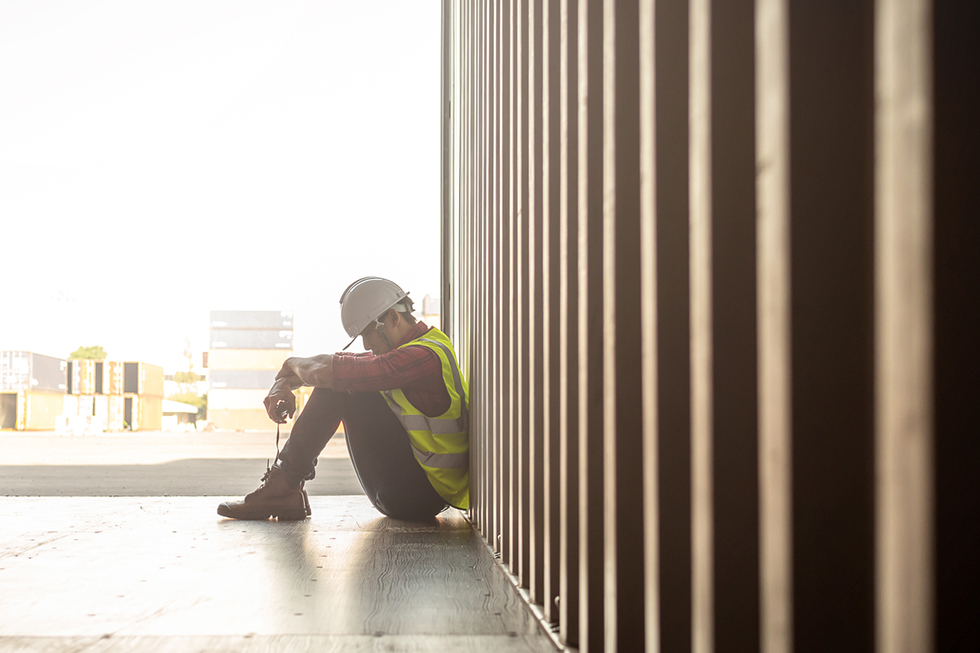
Mental health is connected to physical pain, financial stress, season work, family pressure, long hours, and field conditions.
A toolbox talk can start a conversation.
But it cannot carry the whole weight of worker wellbeing.
That is one of the most important insights from C. S. McCrossan’s conversation with the Minnesota Construction Mental Health Alliance. Mental health in construction is not isolated from the rest of the work. It is tied to the body, the schedule, the paycheck, the family, the season, the weather, the pain someone is carrying, and the pressure to keep going.
Brittney May, safety coordinator at C. S. McCrossan, put it simply.
“Mental health is the tip of the iceberg,” she said. “You need to look beyond just mental health and look at the contributing factors affecting wellness.”
For C. S. McCrossan, that emerging framework includes three connected areas: physical wellbeing, mental wellbeing, and financial wellbeing.
That is a useful model for leaders across the industry because it turns a complex issue into something practical.
Physical pain becomes mental pressure
Construction is hard on the body. Everyone in the industry knows that.
But leaders may underestimate how physical strain can affect mental wellbeing over time. A sore shoulder, a bad back, a foot that will not heal, or chronic pain that makes it harder to sleep can become more than a physical issue. It can create stress, fear, frustration, and worry about lost time or lost income.
Tom McCrossan described it this way: “These people work really hard. And when you get chronic pain in your body, that wears on you.”
He shared a simple story from the field. An onsite physical therapist asked him how he was doing, and he mentioned a nagging pain in his foot. Before long, he had taken off his boot and was getting practical support and exercises.
The moment was lighthearted, but the point was serious.
“If these folks are available to assist with that, or show a stretch that can help, that gets back to overall health,” Tom said. “It’s all connected.”
S. McCrossan has been acting on that connection by contracting with On-Site Solutions for a roaming physical therapist. Brittney said the physical therapist comes onsite for eight hours once a week and is available by phone or email between visits. The support is available for work-related and non-work-related issues, and the goal is to help workers address pain and physical concerns before they become bigger problems.
“She’s there for our people,” Brittney said.
The company also uses a stretch-and-flex program to help workers physically prepare for the day.
That kind of support does more than reduce claims. It sends a message: your body matters, your pain matters, and early support is part of safety.
Financial stress belongs in the wellbeing conversation
The financial side of construction work is another stressor leaders should not ignore.
Seasonal work, layoffs, benefit-hour requirements, changing schedules, family obligations, and the off-season can create real pressure for workers. For many people in the field, financial stress is not separate from mental health. It is one of the forces that shapes it.
Brittney said C. S. McCrossan has been exploring ways to bring financial wellness education into spring orientations.
“For our spring orientations, we’ve talked about having the EAP or the unions come in,” she said. “The 49ers and the Carpenters offer free financial coaches, so we could give workers financial wellness or budgeting support to help mitigate that stressor, which circles back to mental wellbeing.”
This is the kind of systems-level idea the Alliance is working to elevate.
Instead of telling workers to manage financial stress privately, leaders can ask: What stressors are predictable in our industry? Which ones show up every year? Which ones could be reduced with better planning, education, or access to trusted resources?
That is not a replacement for mental health support. It is prevention.
Resources need to be visible before crisis
- S. McCrossan’s mental health work also includes visible and repeated resource sharing.
Brittney described toolbox talks, jobsite posters, onboarding information, hard hat stickers with QR codes, EAP resources, and mental health awareness training. Those touchpoints matter because a worker may not need help the first time they see a resource. But they may remember it later when they, a coworker, or a family member is struggling.
Mental health support cannot be buried in a benefits portal no one opens. It has to be present where people work, gather, train, and talk.
What leaders can ask now
For leaders across the construction industry, the C. S. McCrossan example offers a set of practical questions:
- What physical stressors are affecting our workers’ mental wellbeing?
- Where are pain, fatigue, heat, smoke, or chronic injuries adding pressure?
- What financial stressors are predictable in our workforce?
- Do workers know how to access EAP resources, union resources, or crisis support?
- Are mental health resources visible on jobsites and in onboarding?
- Are supervisors trained to notice when someone may be struggling?
- Are we addressing stressors upstream, or only responding after someone reaches crisis?
These questions do not require leaders to have all the answers. They require leaders to stop treating mental health as a standalone topic.
Mental wellbeing is shaped by the conditions around the worker.
That means prevention has to happen inside those conditions, too.
A call to turn strategy into tools
The Minnesota Construction Mental Health Alliance is building a place where leaders can move from concern to action.
Action Groups are where ideas like these can become usable across the industry. If you are a contractor, owner, labor leader, public agency, healthcare partner, funder, or donor, this is where your involvement can help create tools that reach beyond one company.
Mental health is not a standalone issue.
The response cannot be standalone either.
Join an Alliance Action Group and help turn mental health strategy into practical tools companies can use in the field.
Get Involved | Minnesota Construction Mental Health Alliance
If you or someone you know needs immediate support, call or text 988.
Sources:
Interview transcript with Tom McCrossan and Brittney May, C. S. McCrossan, conducted by Cheri Quinn for the Minnesota Construction Mental Health Alliance. This supports the interview quotes, C. S. McCrossan examples, mental health training references, onsite physical therapy discussion, financial wellness planning, and leadership/culture themes.
Centers for Disease Control and Prevention, Suicide Rates by Industry and Occupation — National Vital Statistics System, United States, 2021. The CDC reported elevated suicide rates among men in construction and construction/extraction occupations.
Minnesota Department of Health, Suicide Data and Reports. MDH lists Minnesota suicide data resources, including its report on male farmers and construction workers using Minnesota Violent Death Reporting System data from 2015–2021.
NIOSH, Critical Steps Your Workplace Can Take Today to Prevent Suicide. This supports the workplace role in suicide prevention, supervisor and coworker awareness, psychological safety, and Total Worker Health framing.
- S. McCrossan, Our History, Safety Commitment, and Careers. These sources support company history, core values, safety commitment, services, and recruiting language.
Minnesota Construction Mental Health Alliance, Get Involved, The Commitment, Donate Now, and About. These sources support the Alliance CTAs, systemic change framing, investment language, Action Groups, and the goal of making mental health a construction safety standard in Minnesota.